
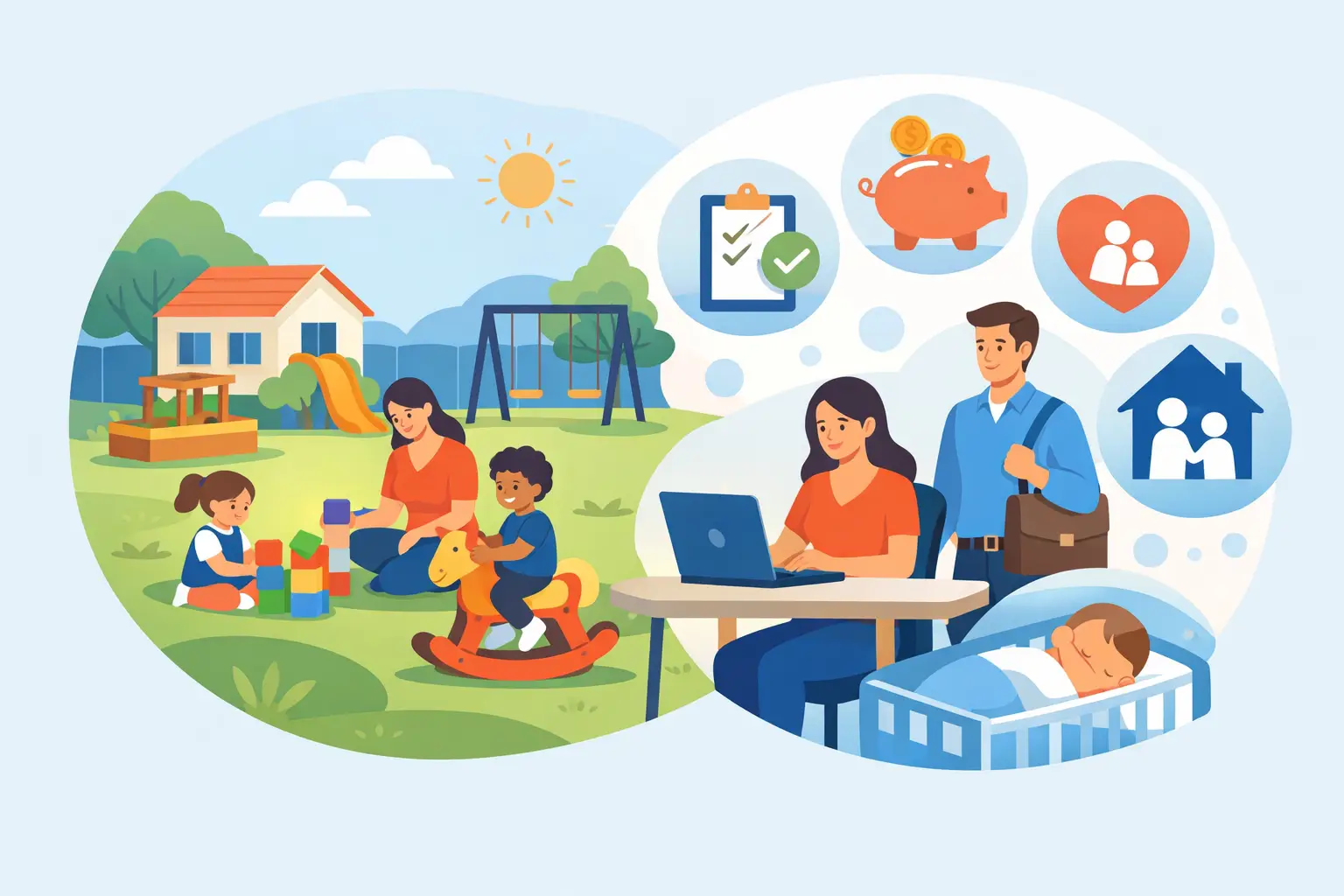
Choosing child care often comes down to one hard question: where will my child feel safe, known, and genuinely cared for while I am away? For many families, the answer is found in the family day home benefits that come with a smaller, more personal setting. When care is licensed and supported by an agency, a family day home can offer the warmth of home along with the structure and oversight parents need to feel confident.
Why family day home benefits matter
Not every child thrives in the same environment, and not every family needs the same kind of schedule or support. That is why family day homes continue to be an important option for parents who want more than simple supervision. They want a home away from home, but they also want standards, safety, and accountability.
A well-run family day home blends those needs in a practical way. Children spend their day in a smaller group, often with mixed ages, familiar routines, and one consistent caregiver. Parents get a setting that can feel calm and personal, while still being part of a regulated child care system when the provider is licensed through an approved agency.
1. Smaller group settings can mean more individual attention
One of the biggest family day home benefits is the size of the environment. In a smaller group, children are often seen more clearly as individuals. A provider has more opportunity to notice how a child settles in each morning, what comforts them, what sparks their curiosity, and where they may need extra support.
That can make a real difference for infants, toddlers, and children who are shy or adjusting to separation from parents. A quieter setting may feel less overwhelming than a larger program. It can also be easier for providers to adapt activities, naps, and transitions based on what the children in their care need that day.
Of course, smaller does not automatically mean better for every child. Some children love a busier, high-energy group. But for many families, the calm and familiarity of a day home is exactly what helps a child feel secure.
2. A home-like environment can support comfort and belonging
There is a reason many parents describe a day home as feeling more natural. The setting itself often looks and feels more like daily family life than a large facility. Children may spend time in cozy play areas, share meals around a table, and build relationships in a space that feels welcoming and predictable.
That home-like atmosphere can be especially helpful during early childhood, when children are still learning how to separate, self-regulate, and trust new adults. Feeling comfortable in the environment often supports smoother drop-offs and stronger emotional security.
For parents, this benefit is not just about appearance. It is about whether a child feels relaxed enough to play, learn, rest, and connect. A loving environment matters, but so does consistency, and the best day homes provide both.
3. Consistent caregivers help build strong relationships
Young children do best when they know who is caring for them. In many family day homes, the same provider is present day after day, which helps build trust over time. Children learn that this adult understands their routines, recognizes their cues, and responds in a dependable way.
That consistency also supports communication with parents. Instead of hearing from multiple staff members, families often speak directly with the person who spent the day with their child. Those daily conversations can be more personal and more detailed, which helps parents stay connected to how their child is doing.
This relationship-based model is one of the most valued family day home benefits. Trust grows more easily when everyone knows each other well.
4. Mixed-age care can encourage social growth
Family day homes often include children of different ages, and that creates a unique social setting. Younger children may learn by watching older ones. Older children often practice patience, leadership, and empathy in ways that do not happen as naturally in same-age groups.
This can feel more like real family or community life. Children are not only interacting with peers at the exact same stage. They are learning how to share space, communicate, and cooperate across age differences.
It is not a perfect fit for every child or every day. Providers need to plan carefully so that infants are safe, toddlers are engaged, and older children continue to be challenged. When the provider is experienced and supported, mixed-age care can be one of the quiet strengths of a family day home.
5. Flexible routines can better match family life
Many parents need child care that works with real schedules, not ideal ones. Depending on the provider and agency policies, a family day home may offer routines that feel more adaptable than a larger center program. That can include a more gradual morning start, personalized nap support, or care that better reflects the rhythm of family life.
Flexibility does not mean a lack of structure. Children still need consistency, and good providers create predictable days with room for individual needs. The value is that routines can often be adjusted with more care and communication.
For working parents, that practical support matters. Child care should not add stress when it can reduce it.
6. Licensed oversight adds an extra layer of confidence
A family day home should feel warm, but it should also be accountable. That is why licensing matters. When a provider is approved through a licensed agency, families are not relying on trust alone. They are choosing care that is monitored within a regulated framework.
That can include home inspections, safety checks, qualification reviews, and ongoing visits to help ensure standards are maintained. It also means there is agency involvement if questions come up about policies, care practices, or compliance.
For parents comparing options, this is one of the most important differences to understand. A private arrangement may feel convenient, but licensed care brings oversight that helps protect children and support quality.
7. Play-based learning can happen in meaningful everyday ways
Children do not need a formal classroom to learn well. In a quality family day home, learning often happens through play, conversation, routines, outdoor time, stories, and hands-on exploration. The setting may be smaller, but the opportunities for development are still rich.
A provider might support language skills during snack time, early math through sorting toys, or social skills during group play. Because the environment is more personal, activities can often be shaped around the children’s interests and developmental stages.
This matters because early learning should feel engaging, not forced. Children grow through relationships and play, and a day home can support both in very natural ways.
8. Family-provider communication is often stronger
When parents drop off and pick up their child in a family day home, communication can feel more direct. There is often more space for quick updates, questions, and honest conversations about routines, milestones, behavior, or changes at home.
That kind of partnership helps everyone. Parents feel informed. Providers understand the child better. Children benefit when the adults around them are working together.
Strong communication does not happen automatically. It depends on the provider’s professionalism, responsiveness, and respect for boundaries. But when it works well, it becomes one of the clearest advantages of home-based care.
9. Family day home benefits extend to providers too
This model is not only valuable for families. It also creates opportunities for caregivers who want to build a professional child care career from home. For many educators, becoming a family day home provider offers meaningful work, independence, and a chance to create a nurturing learning environment within their own community.
That said, running a day home involves much more than enjoying time with children. Providers must meet standards, maintain safe spaces, manage records, communicate with families, and stay current with requirements. Agency support can make that path more manageable by guiding providers through approval, monitoring, and ongoing professional development.
For those considering this step, the benefit is not just starting a business. It is becoming part of a regulated support system that values quality care.
10. Community-based care keeps children close to home
Another reason families choose day homes is proximity. Care in a neighborhood setting can make daily life easier and help children feel connected to their local community. They may spend time near familiar parks, streets, and routines rather than traveling farther to a larger program.
For families in communities across the Edmonton area, that local connection can be especially helpful. A nearby, licensed day home may reduce commute stress and make the child care experience feel more rooted in everyday family life.
Convenience alone should never be the only deciding factor, but when quality and location come together, it can be a strong fit.
11. The right match can feel more personal
Not every family day home is right for every family. That is part of what makes the model work so well when the match is thoughtful. Some parents want a quiet environment for an infant. Others need a provider experienced with active preschoolers. Some value outdoor play, while others prioritize language support, daily structure, or cultural familiarity.
A good placement process helps families look beyond openings and hours. It focuses on fit. When a child is placed with the right provider, care feels less transactional and more relational. That personal connection is often the difference parents notice most.
What parents should keep in mind when choosing care
The benefits are real, but asking the right questions still matters. Parents should look at licensing status, safety practices, daily routines, communication style, and how the provider responds to children. A warm setting should also be organized, professional, and clear about expectations.
It is also wise to think about your child’s temperament. Some children flourish in a smaller home setting. Others may prefer a larger group as they grow. Child care decisions are rarely one-size-fits-all, and families should feel comfortable choosing what fits their child now, not what sounds best on paper.
At Rightchoice Family Day Homes Agency, that balance between loving care and licensed oversight is central to how family day homes are supported. Families deserve both.
When child care feels safe, personal, and dependable, parents can leave for the day with a little more peace of mind and children can settle into a place that truly feels like they belong.