
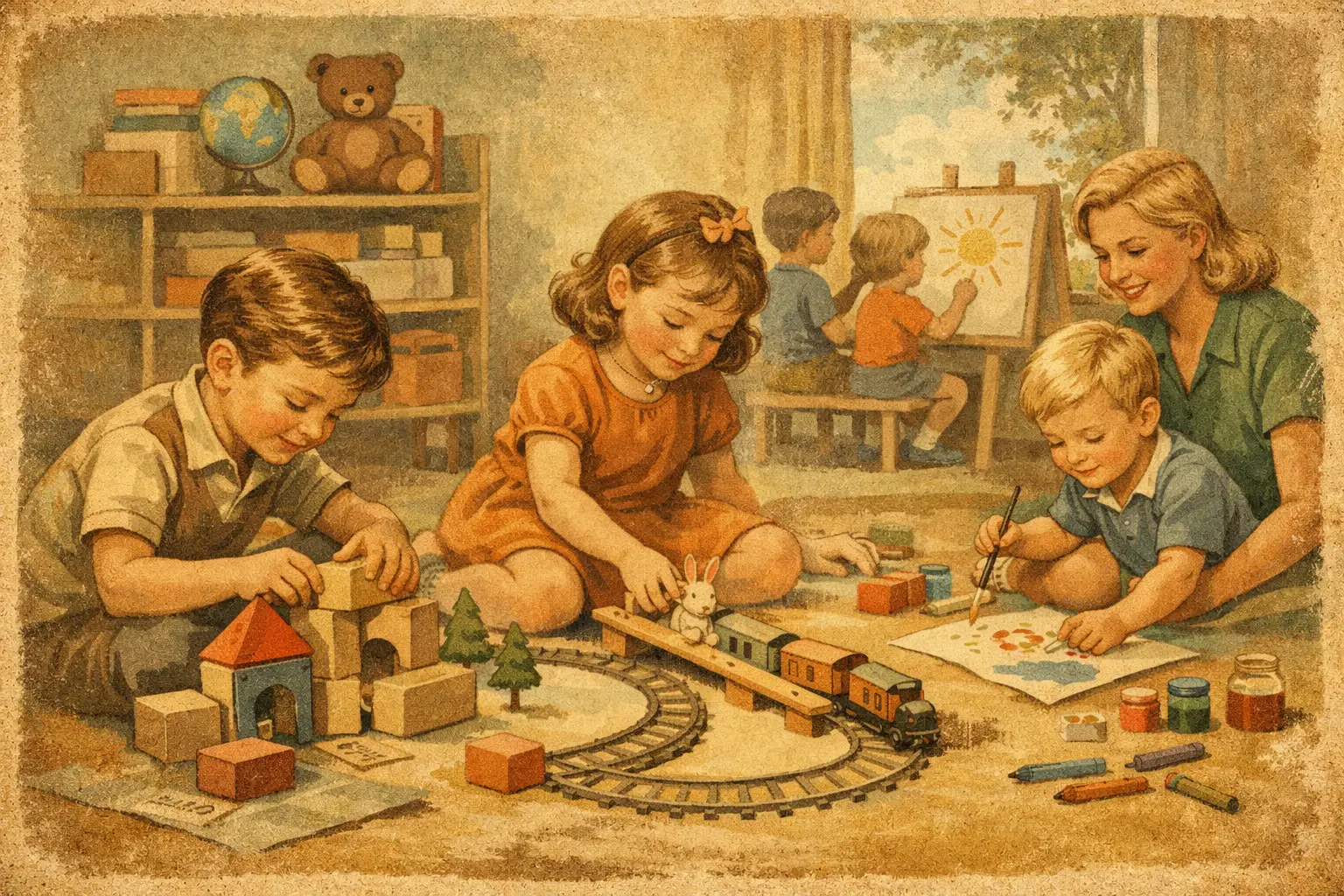
A child lining up blocks on the living room rug may look like they are simply passing the time. In early learning, that moment can be full of meaning. The benefits of play based learning in early childhood education show up in those everyday experiences – when children test ideas, build confidence, solve small problems, and learn how to connect with others in a setting that feels safe and familiar.
For parents, this matters because the early years shape how children approach learning, relationships, and change. For educators, it matters because play is not a break from learning. It is one of the clearest ways young children learn best. In a licensed home child care environment, where routines are personal and children receive close attention, play-based learning can be especially effective.
What play-based learning really means
Play-based learning is often misunderstood as unstructured free time. In quality early childhood settings, it is much more intentional than that. Children explore materials, ideas, and relationships through activities that match their stage of development, while educators observe, guide, and extend the learning.
That might mean setting out loose parts for building, reading a story and acting it out, adding measuring cups to water play, or helping children take turns during pretend cooking. The learning happens through doing. Instead of asking young children to sit still and absorb information that feels abstract, play invites them to use their bodies, language, curiosity, and imagination together.
This approach does not remove structure. It changes the role of the adult. Rather than leading every moment, the educator creates a thoughtful environment, watches for learning opportunities, and supports children as they explore.
The benefits of play based learning in early childhood education
One of the strongest benefits of play based learning in early childhood education is that it supports the whole child at once. Academic growth, social development, emotional regulation, communication, and physical coordination do not happen in separate boxes during the early years. They develop together.
When a child builds a tower, they are not only learning about size and balance. They may also be practicing patience, coping with frustration, using descriptive language, and learning how to work beside another child. When children engage in pretend play, they experiment with roles, routines, and emotions. They begin to understand other people’s perspectives, which is a foundation for empathy and cooperation.
Play also gives children repeated chances to make choices. That matters because independence grows through small moments. Choosing a puzzle, figuring out how to fit pieces together, and asking for help when needed are all early forms of problem-solving and self-advocacy.
In home-based care, these moments can be easier to notice and support. Smaller group settings often make it possible for educators to respond closely to each child’s interests, temperament, and pace.
Social and emotional growth happens naturally through play
Many parents worry about whether their child is ready to be around others, share materials, or follow routines. Play creates a gentle path into those skills. Children learn to wait, negotiate, express feelings, and recover from disappointment in real situations with caring adult support.
For example, a disagreement over toy animals may become a lesson in turn-taking and language. A child who feels nervous joining a group may gain confidence through side-by-side play before participating more fully. These are important developmental steps, and they are often learned best in a warm environment where children feel known.
Emotional security is a major part of quality early childhood care. When children feel safe, they are more likely to explore, communicate, and try new things. Play supports that sense of security because it feels natural to children. It gives them room to express what they know and what they need.
Language and thinking skills grow through hands-on experiences
Young children build language best when words are connected to action, objects, and relationships. During play, they hear new vocabulary, practice conversation, ask questions, and describe what they are doing. An educator might introduce words like heavy, smooth, next, under, or empty in a way that makes immediate sense to the child.
Cognitive growth also strengthens through play. Sorting objects builds early math skills. Pouring water introduces volume and cause and effect. Pretend grocery shopping encourages memory, sequencing, and symbolic thinking. These are the building blocks of later academic learning, but they develop in a way that fits early childhood rather than pushing formal instruction too soon.
That is an important distinction. School readiness is not just about knowing letters or numbers. It also includes focus, persistence, communication, confidence, and the ability to engage with others. Play supports all of these.
Why play-based learning works well in family child care
A family day home can offer a home away from home, and that setting pairs naturally with play-based learning. Daily life already includes rich learning opportunities – preparing snacks, tidying toys, caring for younger children, talking through routines, and exploring indoor and outdoor spaces.
Because the environment is smaller and more relationship-based, educators can often adapt experiences more easily. A child fascinated by trucks may be encouraged to count wheels, compare sizes, read transportation books, and create roads from blocks. A child who needs extra reassurance may be supported through familiar routines and individualized guidance.
This does not mean every home setting is the same. Quality depends on the provider’s training, attention to child development, and commitment to safe, consistent care. In a licensed and monitored setting, families can feel more confident that play is being supported within clear standards for health, safety, and learning.
For providers, this is where professional guidance matters. Play-based learning works best when it is backed by observation, planning, and knowledge of developmental milestones, not just good intentions.
Common concerns parents have about play-based learning
Some parents hear the word play and wonder whether enough learning is happening. That concern is understandable, especially when families want their children to feel prepared for preschool or kindergarten.
The reality is that play-based learning is not the absence of teaching. It is a developmentally appropriate way of teaching young children. A worksheet may look more academic, but it often asks children to perform skills before they are ready to understand them deeply. Play allows learning to be active, meaningful, and repeated in different ways.
Another concern is whether children will learn boundaries in a play-focused setting. They can and should. Strong play-based programs still have routines, expectations, and adult guidance. Children learn to clean up, listen, transition between activities, and respect others. The difference is that these skills are taught in context, with support, instead of through pressure.
There are trade-offs, of course. Play-based learning can look less uniform than a highly structured academic program. Two children may be working on different skills at the same time. That flexibility is a strength, but it also requires educators who can observe closely and respond thoughtfully.
What educators and families should look for
If you are a parent choosing care, ask how the provider supports learning through daily routines and play. Look for signs that children have access to open-ended materials, conversation, outdoor time, and age-appropriate choices. Notice whether the environment feels calm, engaged, and responsive rather than overly rigid or chaotic.
If you are an educator or prospective provider, play-based learning asks you to be intentional. That includes planning inviting activities, observing how children use them, and adjusting based on what you see. It also means understanding that supervision, safety, and regulation are part of quality learning environments, not separate from them.
In regulated home child care, that balance matters. Children benefit when loving care is paired with clear standards, ongoing support, and professional accountability. Agencies such as Rightchoice Family Day Homes Agency help strengthen that balance by supporting both families and providers within a licensed framework.
The long-term value of play in the early years
The strongest early learning environments do more than keep children busy. They help children feel capable. Through play, children learn that ideas can be tested, problems can be solved, mistakes can be repaired, and relationships can be built.
Those lessons stay with them. A child who has practiced curiosity, flexibility, and cooperation through everyday play carries those habits into later classrooms and social settings. That does not happen from pressure alone. It grows from steady guidance, safe relationships, and meaningful experiences that respect how young children develop.
When families and educators understand the value of play, they can make child care choices with more confidence and more clarity about what quality truly looks like. Sometimes the most important learning starts with a block tower, a pretend kitchen, or a muddy pair of boots by the door.