
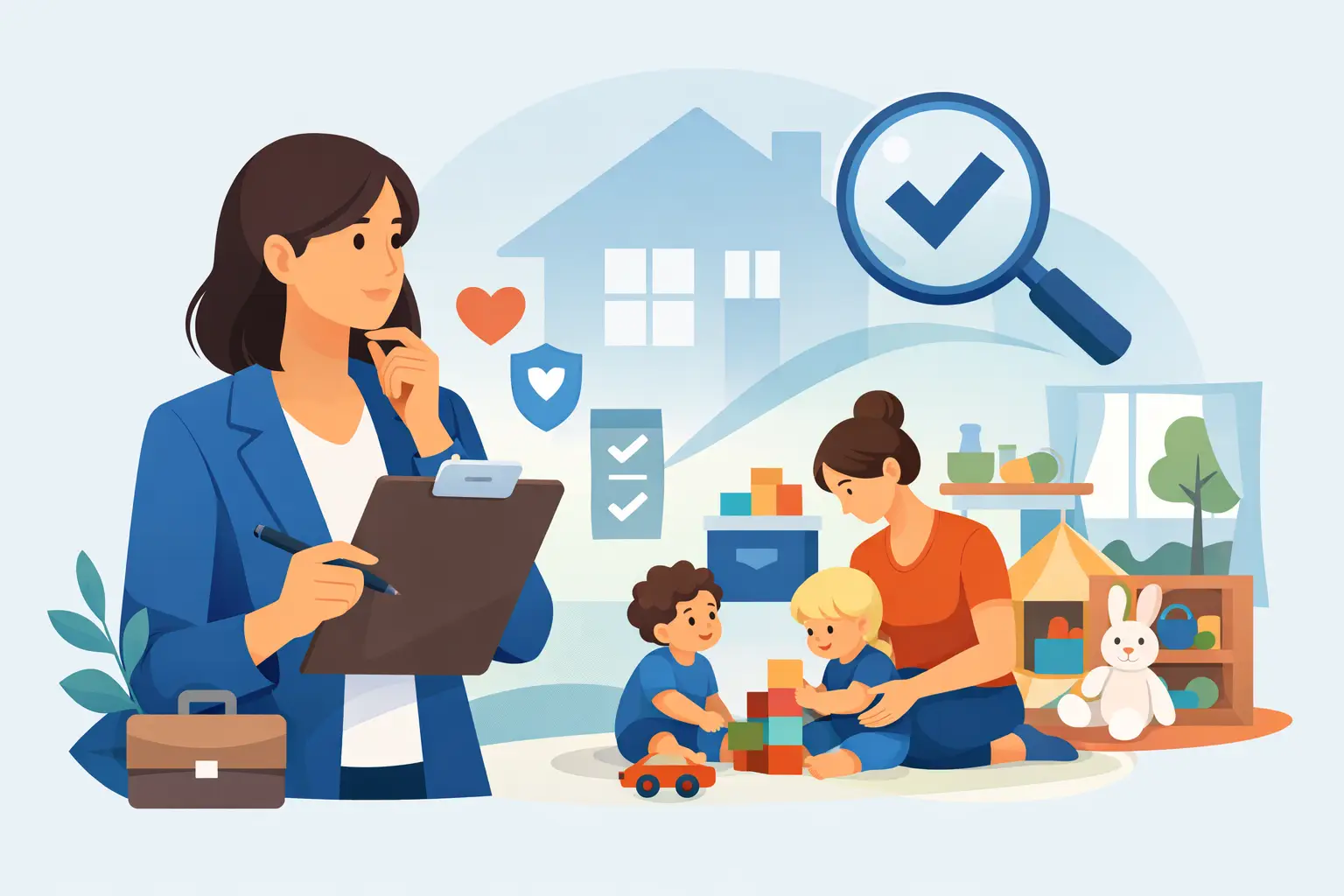
Opening your home to children is a meaningful decision, but it is also a regulated one. This family day home approval guide is for prospective providers who want a clear picture of what approval involves, what agencies look for, and how to prepare for the process with confidence.
For many educators and caregivers, family day homes offer the best of both worlds. You can build a small, nurturing program in a home setting while running a professional child care business. For parents, approved family day homes can feel like a home away from home – warm, personal, and community-based – with the added reassurance of oversight, standards, and ongoing monitoring.
What approval means in practice is simple: your home, your qualifications, and your daily operations must meet regulated expectations. The process is designed to protect children, support families, and help providers deliver safe, consistent, high-quality care.
What a family day home approval guide should actually explain
A good family day home approval guide should do more than list paperwork. It should help you understand the purpose behind each step.
Approval is not only about passing an inspection. It is about showing that you can provide a safe environment, respond appropriately to children’s needs, maintain healthy routines, and operate within the standards set for regulated family day homes. Agencies review the physical space, but they also look at your readiness as a caregiver and business operator.
That distinction matters. Some applicants are strong with children but need help organizing records, policies, or safety procedures. Others have a well-prepared home but need to strengthen their understanding of child development or daily programming. Approval is often a process of preparation, not a single yes-or-no event.
The first step is choosing to work with an agency
In Alberta’s regulated child care framework, family day home providers work through a licensed agency. That agency is responsible for guiding you through approval, reviewing your documentation, completing home assessments, and continuing to monitor and support your program after you are approved.
This relationship is important. A strong agency does not disappear after the initial application. It helps you understand standards, prepares you for visits, answers questions about ratios and records, and gives you professional support as your day home grows.
For new providers, that support can make the difference between feeling overwhelmed and feeling prepared. Even experienced caregivers benefit from having a knowledgeable partner who understands compliance, family expectations, and the realities of home-based care.
Home safety is more than a checklist
One of the most important parts of the approval process is the home inspection. Families often assume this means making sure a home is tidy. In reality, the review is much more specific.
Agencies look at whether the environment is safe, child-friendly, and appropriate for group care. That includes entrances and exits, sleep areas, play spaces, food preparation areas, supervision lines, storage of cleaning products and medications, and access to outdoor play. Smoke alarms, emergency planning, and general hazard prevention all matter.
This is also where practical trade-offs come in. A beautiful home is not automatically an approvable child care environment, and a modest home is not automatically a poor fit. What matters is whether the space can support safe supervision and daily routines. Sometimes a room may need to be rearranged. Sometimes a provider needs gates, outlet covers, locked storage, or clearer emergency procedures. Approval is often about suitability and consistency, not perfection.
Qualifications, records, and background checks
A regulated day home setting still depends on professional documentation. Providers should expect to submit personal identification, proof of required training, certifications, and background checks as part of the approval process.
Depending on the agency and current requirements, this may include first aid, criminal record checks, child intervention checks, references, and documentation related to prior child care experience or education. Agencies may also ask for health information or additional forms tied to provincial standards.
This part of the process can feel administrative, but it is one of the clearest ways trust is built with families. Parents are not just choosing a warm caregiver. They are choosing a provider whose qualifications and history have been reviewed through a regulated process.
If you are new to child care, do not assume that a lack of formal classroom experience ends the conversation. Agencies often work with applicants who bring parenting experience, community care experience, or a genuine interest in early learning, then help them understand what formal steps are needed next.
Daily programming matters during approval
Approval is not only about whether children will be safe. It also considers how children will spend their day.
Family day homes are expected to support children’s development through routines, play, rest, meals, and age-appropriate experiences. That does not mean your home needs to look like a preschool classroom. In fact, one of the strengths of a family day home is that learning happens in a more natural environment. Children can learn through play, conversation, music, outdoor time, stories, and everyday routines.
Still, agencies want to see intention. How will you structure the day? How will infants rest safely while older children play? How will you support social development in mixed-age groups? How will you handle transitions, behavior guidance, and communication with parents?
These questions matter because quality home-based care depends on more than affection. Loving care and thoughtful planning need to work together.
Policies and communication build parent confidence
A provider may be excellent with children and still struggle if expectations with families are unclear. That is why approval often includes discussion about policies, parent communication, attendance, illness, emergencies, and daily procedures.
Parents want to know what the day looks like, how concerns will be handled, when they will receive updates, and what happens if a child is sick or a provider is unavailable. Clear policies reduce confusion and support stronger relationships from the beginning.
This is especially important in a home setting, where the line between personal space and professional service can feel blurred if boundaries are not well defined. A regulated day home should feel warm and welcoming, but it should also feel organized and dependable.
The family day home approval guide providers need for inspections
If you are preparing for approval, it helps to think of the inspection process as a conversation backed by standards. The goal is not to catch you off guard. The goal is to confirm that children can be cared for safely and appropriately in your home.
Before an inspection, review your space as if you were a parent entering for the first time. Are hazards visible? Can children be supervised easily? Are emergency numbers and plans accessible? Are cleaning supplies and medications locked away? Is there room for rest, play, and meals that fits the ages you plan to serve?
Then look beyond the space. Make sure your paperwork is current, your certifications are complete, and your routines make sense on a normal day, not just on inspection day. If your plan only works when everything is perfectly quiet and organized, it may need adjusting. Real family day home care includes busy mornings, emotional transitions, diapering, meals, and outdoor time. Your systems need to hold up in real life.
Approval is the beginning, not the finish line
One of the biggest misconceptions about regulated family day homes is that once approval happens, the hard part is over. In reality, approval is the start of an ongoing professional relationship.
Approved providers continue to receive agency visits, monitoring, and support. They may need to update records, renew checks and certifications, document incidents, and adapt to changes in standards or family needs. Good agencies also provide professional development and practical coaching over time.
That ongoing oversight benefits everyone. Providers have someone to turn to with questions. Families know there is accountability beyond the initial application. Children benefit from an environment that is being supported, reviewed, and strengthened over time.
For providers, this can feel reassuring rather than restrictive. Running a child care program from home comes with many moving parts. Having guidance in place helps you stay focused on what matters most – creating a safe, consistent, loving environment where children can grow.
If you are considering this path, be honest about your readiness, open to feedback, and willing to prepare carefully. A strong family day home is built step by step, and the approval process is there to help you build it well.