
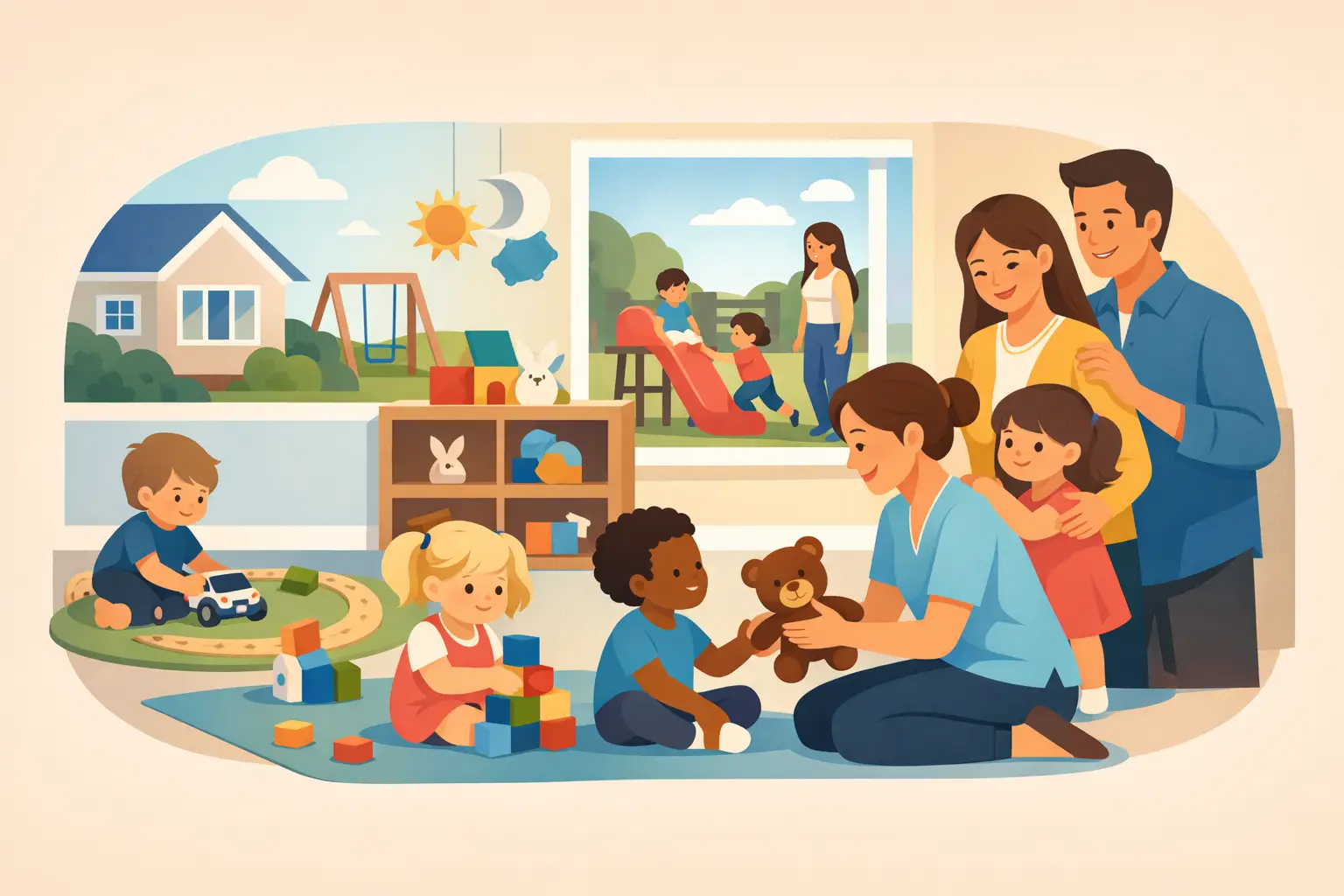
When you are choosing child care, the setting matters just as much as the schedule. A licensed family day home offers something many families are looking for – a smaller, more personal environment where children can feel known, safe, and cared for each day. For educators, it can also be a meaningful way to build a child care business from home while working within clear standards and professional support.
That balance is what makes this model so valuable. It combines the warmth of home-based care with the accountability of a regulated system. For parents, that can ease some of the uncertainty that comes with leaving a child in someone else’s care. For providers, it creates a path that is both independent and supported.
What is a licensed family day home?
A licensed family day home is home-based child care that operates under the supervision of an approved agency and follows provincial child care rules. Instead of running entirely on its own, the provider is monitored, guided, and approved through a licensing process designed to protect children and support quality care.
That distinction matters. Not every day home is licensed, and not every home child care setting is held to the same standards. In a licensed model, providers typically go through screening, home inspections, safety reviews, documentation checks, and ongoing monitoring. They also receive direction on child development practices, recordkeeping, and daily operations.
For families, this means the home setting may feel relaxed and familiar, but it is not informal in the ways that affect health, safety, and accountability. There is structure behind the care.
Why families choose a licensed family day home
Many parents are not simply looking for available child care. They are looking for the right fit. A large child care center may work well for some children, but others do better in a quieter environment with fewer transitions and a more consistent caregiver.
A licensed family day home often appeals to families who want that home-away-from-home feeling. Children are usually part of a smaller group, which can allow for more individualized attention. Daily routines may feel gentler and more natural, especially for infants, toddlers, and children who need time to warm up in new environments.
There is also the relationship piece. In a day home, families often build a close connection with the provider over time. That consistency can support trust, smoother drop-offs, and a stronger understanding of a child’s habits, preferences, and developmental needs.
Still, a smaller setting is not automatically better for every child. Some children thrive on the energy and pace of a larger group. Others benefit from the calm and predictability of home-based care. The right choice depends on your child’s temperament, your family schedule, and the kind of communication you want with your caregiver.
What licensing adds to home-based care
Licensing is not just a label. It is the part that helps turn a private arrangement into a regulated service families can evaluate with more confidence.
In Alberta, licensed family day homes work with an agency that helps ensure providers meet the Family Day Home Standards Manual. That usually includes reviewing qualifications, checking safety features in the home, confirming required documentation, and conducting ongoing visits after approval. Providers are not left on their own to interpret standards as they go.
This oversight helps in practical ways. Emergency procedures are expected to be in place. The environment must be suitable for children. Records need to be maintained. Health and safety expectations are not optional. That does not mean every licensed home looks exactly the same, because each provider brings a different style and personality. It does mean there is a consistent framework behind the care.
For parents, that framework can make it easier to ask informed questions. For providers, it creates clear expectations from the start.
What to look for as a parent
If you are considering a licensed family day home, the strongest choice is usually a combination of compliance and connection. Standards matter, but so does the everyday experience your child will have in the home.
Start by paying attention to how the provider communicates. A good provider is usually clear, warm, organized, and open to questions. You should be able to talk about routines, meals, naps, behavior guidance, outdoor play, and how the day is structured. You are not looking for scripted answers. You are looking for confidence, transparency, and consistency.
It also helps to notice how the space feels. Is it welcoming and calm? Are there safe, age-appropriate materials for play? Do children seem comfortable and engaged? A loving environment is hard to fake. Parents often sense very quickly whether a space feels settled and child-focused.
Ask about how the provider handles illnesses, incidents, communication with families, and developmental concerns. These conversations may seem small at first, but they tell you a great deal about the quality of care. A provider who works under agency oversight should also be able to explain what that support looks like.
Families in communities such as Edmonton, St. Albert, Sherwood Park, and surrounding areas often want care close to home, but convenience should not be the only factor. A shorter commute is helpful, yet the best placement is one where your child can feel secure and your family can build a dependable relationship over time.
What to expect if you want to become a provider
For many educators and caregivers, opening a day home starts with a simple idea: I want to care for children in a more personal setting. What they often discover is that a licensed family day home is also a professional commitment. It requires planning, preparation, and a willingness to work within regulated standards.
That is not a drawback. In many cases, it is what helps a provider build something sustainable.
The approval process typically includes submitting an application, completing required checks, showing that your home meets safety expectations, and verifying that you have the right training or qualifications. You may also need policies, emergency plans, and organized records before children can be enrolled.
This can feel like a lot, especially for someone new to the field. But agency support makes a real difference. Instead of sorting through every requirement alone, providers can get guidance on what is needed, what order to complete things in, and how to prepare for ongoing compliance after approval.
That support continues after licensing. A strong agency does more than inspect. It helps providers grow. That may include regular visits, professional development, help with documentation, and practical advice when questions come up during daily operations.
The trade-off between independence and support
Some people are drawn to unlicensed child care because it seems simpler and more flexible. In some ways, it can be. There may be fewer formal steps at the beginning and fewer reporting obligations along the way.
But simplicity has a trade-off. Without agency oversight, providers may have less guidance, and families may have fewer assurances about standards, monitoring, and accountability. A licensed model asks more of everyone involved, but it also offers more structure.
For providers, that means less total independence, but more professional backing. For parents, it may mean slightly more paperwork, but greater peace of mind. In child care, that trade can be worth it.
Why agency support matters
A licensed family day home works best when the relationship between agency, provider, and family is strong. The provider delivers the daily care, but the agency helps uphold the standards that protect quality. Families benefit from both.
This is where a community-based agency can make a real difference. Matching families with approved providers, helping with registration, supporting licensing, and continuing to monitor care all contribute to a more dependable experience. Rightchoice Family Day Homes Agency is built around that kind of support system, helping families and educators move forward with more clarity and confidence.
Child care is never just about coverage for the workday. It is about trust, development, routine, and the feeling a child carries into and out of a space every day. When a licensed home is thoughtful, well-supported, and genuinely nurturing, it can offer something many families hope to find but struggle to define at first – a place that feels both caring and accountable, like home with standards behind it.