
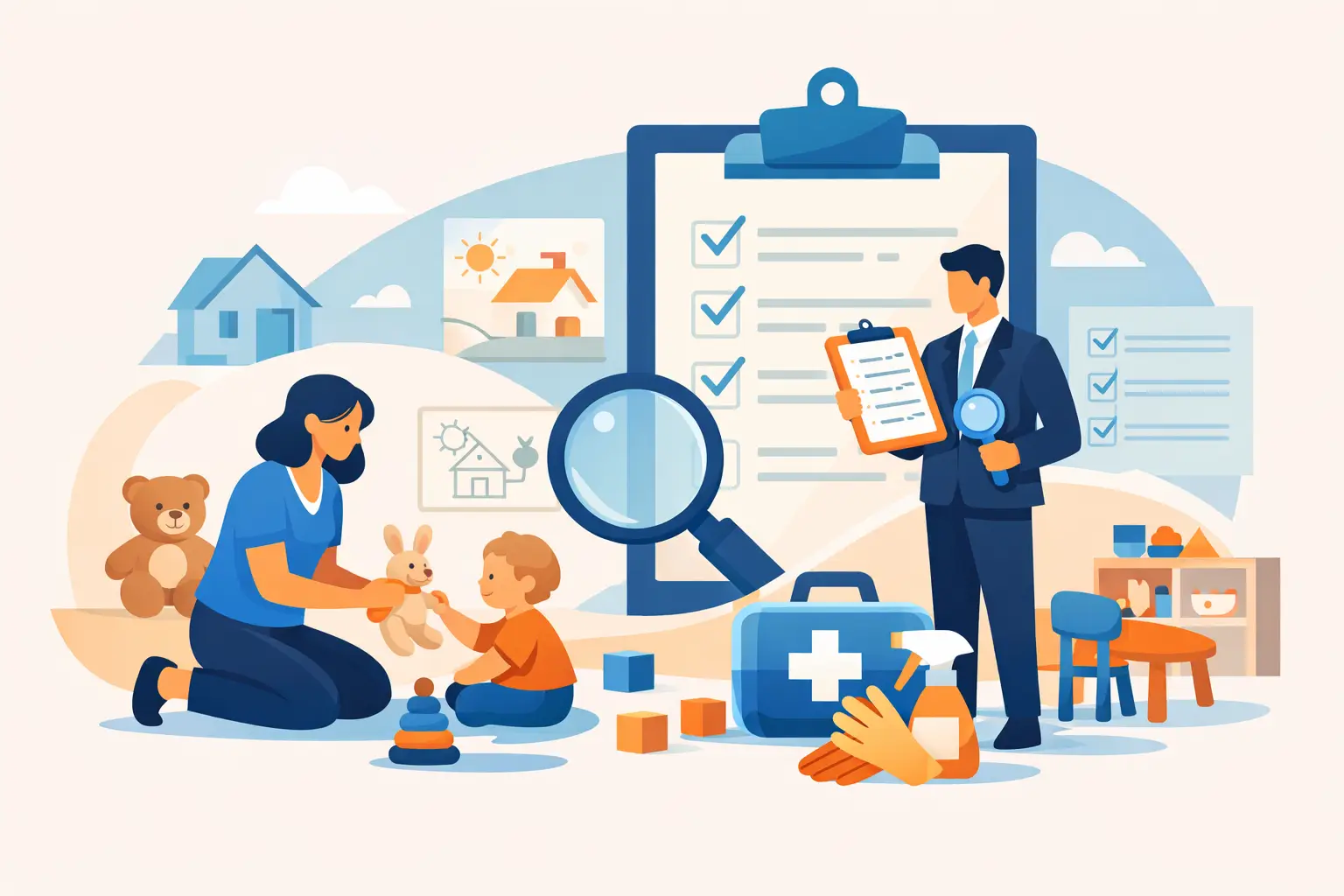
The night before an inspection, many providers start noticing every outlet cover, every paper on the counter, and every toy bin that suddenly feels out of place. If you are trying to prepare for child care inspection, that anxious feeling is common. The good news is that inspections are not about creating a perfect home. They are about showing that children are cared for in a safe, organized, and well-managed environment every day.
For family day home providers, the strongest inspection prep usually starts long before anyone walks through the door. A calm, inspection-ready program comes from consistent routines, up-to-date records, safe spaces, and a clear understanding of what standards look like in real life. When those pieces are in place, an inspection feels less like a surprise and more like a regular check on the quality of care you already provide.
What inspectors are really looking for
It helps to reframe the process. An inspection is not only a checklist of what is visible in your home. It is also a review of how you supervise children, how you respond to health and safety needs, how you document important information, and whether your daily program supports children appropriately.
That means a tidy room matters, but it is not the whole story. Inspectors also notice whether walkways are clear, whether medications are stored correctly, whether emergency information is easy to access, and whether ratios and supervision practices are being followed. They may ask questions that show whether your procedures are understood, not just written down.
This is why last-minute cleaning helps only so much. If your files are incomplete or your emergency plan is outdated, a neat playroom will not fix that. The best way to prepare for child care inspection is to think in layers: safety, documentation, environment, and daily practice.
Prepare for child care inspection by starting with safety
Safety is usually the area providers worry about most, and for good reason. It is one of the clearest signs that a home-based program is ready to care for children responsibly. Start by walking through your home as if you were seeing it for the first time. Look low, high, and at child level.
Check that cleaning products, medications, sharp tools, and any hazardous materials are locked away or stored fully out of reach. Make sure outlet covers are in place where needed, gates are secure, and furniture is stable. If you use a backyard or outdoor play area, inspect fencing, surfaces, and equipment for wear or new hazards.
Emergency readiness matters just as much as everyday safety. Your smoke alarms and carbon monoxide detectors should be working. Fire extinguishers should be accessible and current if required by your standards. Emergency contact information, evacuation procedures, and any required first aid supplies should be easy to locate. If an inspector asks where something is, you should not have to search for it.
There is also a practical side to safety that providers sometimes overlook. Busy drop-off areas, winter boots by the door, diapering supplies left out during a rush, or a pet dish in a common space can all create concerns depending on the setup. Inspection prep is often about noticing the small things that become invisible during a busy week.
Your records should be current, not almost current
Documentation can create more stress than the physical inspection of the home because paperwork is easy to postpone. A form that is only missing one signature still counts as incomplete. A policy that was updated mentally but not on paper is still out of date.
Before an inspection, review your child files carefully. Make sure enrollment forms, emergency contacts, permissions, health information, and attendance records are complete and easy to access. If your agency or regulatory framework requires incident records, medication logs, immunization information, or daily health checks, confirm those are current as well.
Training documents should also be in order. Keep copies of certifications, renewals, and any required professional development together in one place. If you work with an agency, this is where their support can make a real difference. A dependable agency helps providers stay organized before inspection day instead of scrambling after a concern is identified.
It also helps to think about readability. Records should not only exist – they should be understandable. If someone opens a file, they should be able to see quickly that the information is complete, current, and maintained consistently.
The home environment should reflect real daily use
An inspection-ready home does not need to look staged. In fact, spaces that feel overly arranged but not functional can raise their own questions. What matters more is whether the environment supports children well.
Children should have room to play, rest, eat, and move safely through the day. Toys and materials should be clean, in good condition, and appropriate for the ages in care. Nap areas should be set up according to safe sleep expectations. Bathrooms and diapering spaces should support hygiene and supervision.
A well-prepared environment also shows intention. Are materials accessible? Can children engage in play without constant restriction? Is there evidence of routines that support learning, comfort, and calm transitions? For family child care settings, the goal is not to copy a large center. It is to show that your home is a loving, structured space where children can thrive.
That includes the everyday details families care about too. Clean eating areas, labeled belongings, handwashing supplies, and age-appropriate activities all help demonstrate that your program is organized and responsive to children’s needs.
How your routine works matters during inspection
Providers sometimes focus so much on the home and paperwork that they forget the inspection may also reflect what happens in real time. How children are welcomed, supervised, redirected, and engaged says a lot about the quality of care.
If your routine is rushed or inconsistent, that often shows. If children are waiting too long with nothing to do, transitions are chaotic, or supervision slips while tasks pile up, those issues can become visible quickly. On the other hand, a simple, steady routine creates confidence. Children know what to expect, and you can stay present.
Think through your day from arrival to pickup. Are there moments that tend to become disorganized? Snack preparation, bathroom breaks, outdoor transitions, and mixed-age play periods often need extra planning. Inspection readiness is partly about reducing those pressure points.
This is also a good time to review your guidance approach. Inspectors may observe how you speak to children, how you set limits, and whether expectations are age-appropriate. Warmth and structure should work together. Children need loving care, but they also need consistency.
Do a mock inspection before the real one
One of the most effective ways to prepare is to do a full practice run. Walk through your home with your own checklist or with support from your agency. Open drawers. Check expiry dates. Review files. Test alarms. Look at your setup from the perspective of someone seeing it with fresh eyes.
A mock inspection helps because most providers do not struggle with major issues. More often, they miss small gaps: an unlabeled medication, a form filed in the wrong folder, a blocked exit, or a policy that was never reprinted after revisions. These are easier to fix when you find them early.
If possible, ask someone you trust to do the walk-through with you. Another set of eyes often catches what you no longer notice. This kind of support is especially valuable for new providers who are still learning how standards apply in a real home setting.
Stay calm and be honest on inspection day
On the day of the inspection, try not to over-explain or panic-clean. Be prepared, be available, and answer questions clearly. If an inspector asks about a procedure, explain what you do in daily practice. If something needs correction, receive the feedback professionally.
No provider gets everything perfect all the time. Strong providers are not the ones who never need guidance. They are the ones who respond well, make improvements promptly, and stay committed to quality care. That mindset matters.
For providers serving families in communities like Edmonton, St. Albert, Sherwood Park, and surrounding areas, inspections are part of building trust. Parents want a home away from home, but they also want proof that loving care is backed by real standards. That is exactly why inspection readiness matters.
When you treat inspection prep as part of your regular practice rather than a stressful event, the whole process becomes more manageable. Your home feels more organized, your records stay current, and your confidence grows with each review. And that steady, prepared approach does more than support compliance – it helps create the kind of child care environment where families and children feel secure the moment they walk in.